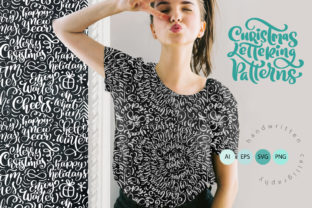
Christmas Lettering Patterns: Integrating Hand-Drawn Calligraphy into Holiday Design Workflows
Creating cohesive holiday branding and personalized gifts requires more than just festive colors; it demands typography that carries emotional weight and visual texture. Christmas lettering patterns serve as a foundational design asset for professionals and hobbyists aiming to bridge the gap between traditional craftsmanship and modern digital production. These resources are not merely decorative backgrounds but functional design elements that streamline the creation of greeting cards, merchandise, and digital content. By utilizing hand-drawn calligraphy combined with Scandinavian vector aesthetics, designers can achieve an authentic, organic look without spending hours drawing individual letters from scratch.
In a professional workflow, these patterns function as versatile building blocks. They integrate seamlessly into broader projects ranging from print-on-demand product lines to corporate holiday communications. The inclusion of traditional phrases such as "Merry Christmas," "Enjoy Xmas," "Happy New Year," "Let it Snow," and "We Love Snow" provides immediate contextual relevance, while the accompanying flourishes, wreaths, and floral elements offer necessary negative space and compositional balance. Understanding how to leverage these assets effectively transforms them from simple downloads into powerful tools for efficient, high-quality creative execution.
The Role of Vector Assets in Pre-Production Planning
Before initiating any holiday design project, establishing a consistent visual language is critical. Christmas lettering patterns fit into the pre-production phase by acting as a style anchor. When planning a series of greeting cards or a seasonal marketing campaign, having a pre-defined set of typographic textures ensures consistency across multiple deliverables. Instead of sourcing disparate fonts that may clash, a unified pattern pack guarantees that the hand-drawn aesthetic remains constant whether applied to a small business card or a large-format banner.
During the planning stage, consider the scalability required for your specific outputs. Because these assets are provided in EPS and AI formats saved in EPS10 version, they are resolution-independent. This technical specification is vital for entrepreneurs and marketers who need to adapt a single design concept for various platforms. A pattern that looks intricate on a gift wrap layout must also remain legible when scaled down for a social media graphic or embroidered onto a textile. Verifying file compatibility with your primary software—whether Adobe Illustrator, Affinity Designer, or CorelDRAW—during the preparation phase prevents workflow bottlenecks later in the process.
Organizing Assets for Efficient Retrieval
Efficiency in design is often determined by asset organization. With this download including six distinct Christmas calligraphic patterns, plus individual elements, a systematic filing structure is recommended. Separate the seamless patterns from the isolated phrases and floral elements. Tagging files with metadata such as "Scandinavian," "Handwritten," or specific phrase keywords allows for rapid retrieval during tight deadlines. For teams collaborating on holiday projects, storing these vector files in a shared cloud library with clear naming conventions ensures that everyone accesses the correct, high-resolution source files rather than low-quality rasterized versions.
Execution: Applying Patterns Across Different Media
The true value of Christmas lettering patterns emerges during the execution phase. The hand-drawn nature of these vectors adds a layer of warmth that standard digital fonts often lack. When designing xmas greeting cards, use the seamless patterns as a subtle background texture at 10-20% opacity to add depth without competing with the main message. Conversely, for t-shirt designs or mug prints, the bold calligraphy quotes can serve as the primary focal point. The integration of wreaths and floral elements helps frame text, creating natural focal points and guiding the viewer’s eye through the composition.
For print-on-demand sellers and small business owners, these patterns facilitate rapid product iteration. A single "Let it Snow" lettering element can be recolored and repositioned to create variations for pillows, tote bags, and apparel within minutes. The Scandinavian influence lends itself particularly well to minimalist, modern holiday aesthetics that appeal to contemporary consumers. By combining the structured geometry of Scandinavian design with the fluidity of hand-drawn calligraphy, creators can produce goods that feel both curated and personal.
Technical Considerations for Print and Digital Output
Quality control is paramount when translating screen designs to physical products. The included PNG files feature transparent backgrounds and are sized at 5000x5000 px at 300 DPI, making them suitable for direct-to-garment printing and high-quality paper stocks. However, for professional offset printing or large-format signage, always prioritize the EPS or AI vector files. Vectors ensure crisp edges regardless of scale, whereas even high-resolution PNGs may show pixelation when stretched beyond their native dimensions.
When working with transparency in programs like Photoshop or Illustrator, be mindful of blending modes. Hand-drawn lettering patterns often contain varying stroke weights that interact differently with colored backgrounds. Testing print proofs on the actual substrate—be it fabric, ceramic, or cardstock—is an essential step in the workflow. Colors on screen rarely match ink on paper perfectly, and the organic texture of calligraphy can sometimes trap ink differently than solid geometric shapes. Adjusting the vector anchor points or stroke width in the AI file before final output allows for precise calibration to the printing method.
Post-Project Integration and Long-Term Value
After completing a holiday campaign or product launch, these assets retain value for future use. Christmas lettering patterns are inherently modular. The flourishes and botanical elements can be extracted and repurposed for non-holiday winter themes, extending the asset's lifecycle beyond December. Scrapbookers and bloggers can archive successful layouts as templates, replacing only the central text while retaining the proven typographic framework. This approach reduces decision fatigue in subsequent seasons and maintains brand recognition over time.
For educators and content creators, these patterns also serve as excellent teaching aids or demonstration materials. Analyzing the stroke construction in the vector files can provide insights into hand-lettering techniques for students learning digital illustration. Bloggers can use the patterns to create custom headers, dividers, and social media templates that reinforce their site’s visual identity. The ability to edit the vectors means users can adjust spacing, swap words, or modify flourishes to fit specific content needs, making the resource adaptable to evolving creative directions.
Compatibility and Workflow Optimization
Seamless integration into existing workflows depends on understanding file interoperability. The EPS10 format is widely supported across legacy and current vector software, ensuring that freelancers using older systems can still collaborate with agencies on newer platforms. SVG files offer web-native scalability for digital invitations and responsive website backgrounds, eliminating the need for multiple image exports. Maintaining a master library of these editable vectors, rather than flattened images, preserves maximum flexibility.
- Vector Editing: Use AI/EPS files to modify colors, reshape flourishes, or combine elements for custom compositions.
- Raster Compositing: Utilize 5000px PNGs for quick mockups, digital scrapbooking, or layered photo editing where vector support is limited.
- Web Implementation: Deploy SVGs for crisp rendering on retina displays and lightweight page loads for holiday landing pages.
- Print Production: Rely on 300 DPI specifications for accurate color separation and detail retention on physical merchandise.
Maximizing Creative Potential Through Strategic Application
Successful implementation of Christmas lettering patterns goes beyond placing a file on a canvas. It involves strategic thinking about audience perception and medium constraints. For corporate clients, the "Happy New Year" or "We Love Snow" phrases may need to be paired with cleaner, sans-serif typefaces to maintain professionalism while adding seasonal spirit. In contrast, personal projects like scrapbooking or handmade gifts allow for maximalist use of the flourishes and dense patterning. Understanding the end-user's expectations guides the density and placement of these decorative elements.
Furthermore, the hand-drawn quality of these patterns solves a common problem in digital design: sterility. In an era of AI-generated imagery and perfect geometric fonts, the slight imperfections and human touch of scanned calligraphy resonate deeply with audiences seeking authenticity. By anchoring your holiday projects with these organic vectors, you signal care and craftsmanship. Whether used for wrapping paper, blog headers, or textile prints, the consistent application of these high-quality assets elevates the perceived value of the final product.
Ultimately, Christmas lettering patterns are a productivity tool disguised as art. They encapsulate hours of skilled lettering work into accessible, editable formats that respect the designer's time. By treating them as integral components of your creative infrastructure—planning around their strengths, executing with technical precision, and archiving for future adaptation—you transform a seasonal download into a sustainable asset for year-round creative success. The combination of traditional holiday sentiment with modern vector utility ensures that your work remains both timely and timeless.