Floral Lux Background: Integrating Elegant Assets into Creative Workflows
In the landscape of digital design and content creation, the distinction between a generic template and a polished final product often lies in the quality of foundational assets. The Floral Lux Background serves as one such foundational element, providing a sophisticated aesthetic base that elevates projects without requiring extensive custom illustration work. For professionals ranging from freelance graphic designers to small business owners managing their own marketing, this asset represents more than just a decorative image; it is a strategic tool for establishing visual tone efficiently. Understanding how to integrate this background into your existing workflow ensures that the charming feel and style it offers translates effectively across various media while maintaining technical integrity and brand consistency.
Defining the Asset Within the Design Ecosystem
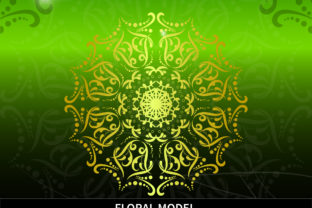
The Floral Lux Background is categorized as a premium texture or pattern asset designed to add depth and organic warmth to digital layouts. Unlike flat colors or harsh geometric patterns, floral lux elements introduce a sense of tactile luxury and softness that appeals to audiences seeking refinement. In a broader creative process, this asset functions as a bridge between minimalist structure and ornate decoration. It provides enough visual interest to prevent a design from feeling sterile, yet remains subtle enough to ensure foreground content—such as typography, product photography, or call-to-action buttons—remains legible and dominant.
For creators working within tight deadlines, this background eliminates the hours typically spent generating complex textures from scratch. It fits into the ecosystem as a "force multiplier," allowing you to achieve a high-end boutique look with the speed of template-based design. Whether used as a full-bleed backdrop for social media graphics or a textured overlay for print collateral, its primary function is to establish an immediate emotional connection with the viewer through color psychology and organic form.
Technical Specifications and File Management
Effective implementation begins with understanding the deliverables. This package includes two distinct file formats that serve different stages of the production pipeline:
- 1 EPS File: The Encapsulated PostScript format is vector-based, making it infinitely scalable without loss of resolution. This file is essential for large-format printing, logo integration, or any project where the background needs to be resized dynamically. It also allows for color manipulation within Adobe Illustrator or Affinity Designer, enabling you to match the floral tones precisely to your brand palette.
- 1 JPG File: The JPEG format provides a rasterized, ready-to-use version optimized for digital screens and quick mockups. This file is ideal for web backgrounds, social media posts, presentation slides, or email newsletters where file size and immediate compatibility are priorities over editability.
Organizing these files correctly at the outset prevents workflow bottlenecks later. Create a dedicated folder within your asset library labeled "Textures" or "Brand Backgrounds." Store the master EPS file in a cloud-synced directory accessible to all team members, ensuring that anyone editing the project has access to the source vector. Keep the JPG in a separate "Web Ready" subfolder to avoid accidentally placing heavy vector files into web projects, which can cause rendering issues or slow load times.
Pre-Project Planning and Brand Alignment
Before applying the Floral Lux Background, conduct a brief suitability assessment. While the asset exudes charm and luxury, it must align with the specific communication goals of the current project. During the planning phase, consider the contrast requirements of your text. If your copy is dense or requires high accessibility compliance (WCAG standards), test the background opacity early. You may need to plan for a solid color underlay or a gradient overlay to ensure readability.
This stage is also where you determine the asset's role relative to other brand elements. Does the floral pattern complement your existing logo, or does it compete with it? If your logo is highly detailed, the Floral Lux Background should likely be used at a lower opacity or blurred slightly to create hierarchy. Conversely, if your branding is typographic and minimal, the background can take on a more prominent role as the primary visual anchor. Making these decisions before opening your design software streamlines the execution phase and reduces revision cycles.
Execution Strategies Across Different Media
The versatility of the Floral Lux Background becomes apparent during the active creation phase. Its application varies significantly depending on the output medium and the intended user experience.
Digital Marketing and Social Content
For Instagram carousels, Pinterest pins, or LinkedIn banners, use the JPG version to maintain fast load times. In this context, the background acts as a unifying theme across a series of posts. Apply a consistent color grade or filter over the background in each post to create a cohesive grid aesthetic. When designing stories or reels covers, utilize the negative space within the floral arrangement to frame video content or text overlays naturally, rather than forcing content into rigid boxes.
Print Collateral and Packaging
When moving to print workflows for business cards, wedding stationery, or product packaging, switch to the EPS file. Print production demands high resolution and accurate color separation. Because the EPS is vector-based, you can adjust individual floral elements if necessary—perhaps removing a specific flower that interferes with a die-cut line or changing a hue to match a specific Pantone spot color. Always request a physical proof when using this background for print, as screen calibration often renders floral textures brighter than they appear on paper.
Web Design and UI Implementation
In web environments, performance is paramount. While the JPG is useful for mockups, consider converting the asset to WebP or AVIF format for live deployment to reduce bandwidth usage. Use CSS properties like background-attachment: fixed to create a parallax effect that adds dynamism to landing pages. However, exercise restraint; the Floral Lux Background works best as a section divider or hero background rather than a pervasive texture behind long-form text, where it could induce visual fatigue.
Integration with Existing Tools and Resources
This background does not exist in isolation; it interacts with your broader toolkit. For users of Canva or similar browser-based platforms, the JPG can be uploaded directly and utilized with built-in transparency sliders and duotone filters. For Adobe Creative Cloud or Figma users, the EPS offers deeper integration. In Figma, you can import the vector and convert it into a reusable component or style, ensuring that every instance of the background across your design system remains synchronized.
Consider how this asset pairs with your typography choices. The organic, flowing lines of a floral lux aesthetic typically pair well with serif typefaces for headings and clean sans-serifs for body text. Avoid overly decorative script fonts, as they may clash with the intricacy of the background. Additionally, if you use stock photography, select images with neutral tones or shallow depth of field to prevent visual competition. The background should support the photography, not distract from it.
Quality Control and Consistency Checks
Maintaining professional standards requires rigorous quality control when using textured backgrounds. A common pitfall is banding, where gradients in the background show visible stripes due to compression or color space mismatches. To mitigate this, ensure your document color profile matches your output destination (RGB for screens, CMYK for print) and export at appropriate quality settings.
Consistency is equally important for brand recognition. If you adopt the Floral Lux Background as part of your visual identity, document its usage guidelines. Specify acceptable opacity ranges, approved color variations, and prohibited modifications. This documentation is invaluable for onboarding new freelancers or collaborating with external agencies, ensuring that the charming style remains intact regardless of who executes the design. Regularly audit your published materials to ensure the background hasn't become dated or overused; even timeless assets benefit from periodic rotation or refreshment.
Long-Term Value and Workflow Efficiency
Investing time in properly integrating the Floral Lux Background yields compounding returns. By establishing a reliable method for deploying this asset, you reduce the cognitive load associated with starting new projects. Instead of staring at a blank canvas, you begin with a textured foundation that immediately suggests layout possibilities and color harmonies. This acceleration is particularly valuable for entrepreneurs and marketers who must produce high-volume content without sacrificing aesthetic quality.
Furthermore, owning both EPS and JPG formats future-proofs your investment. As your business scales from digital-only to physical products, or as display technologies evolve toward higher resolutions, the vector source ensures you are never limited by pixelation. Treating this download not merely as a picture but as a modular design component transforms it from a simple decorative purchase into a lasting pillar of your creative infrastructure. Through thoughtful preparation, technical proficiency, and strategic application, the Floral Lux Background becomes an integral part of a sustainable, efficient, and visually compelling production workflow.